Menu


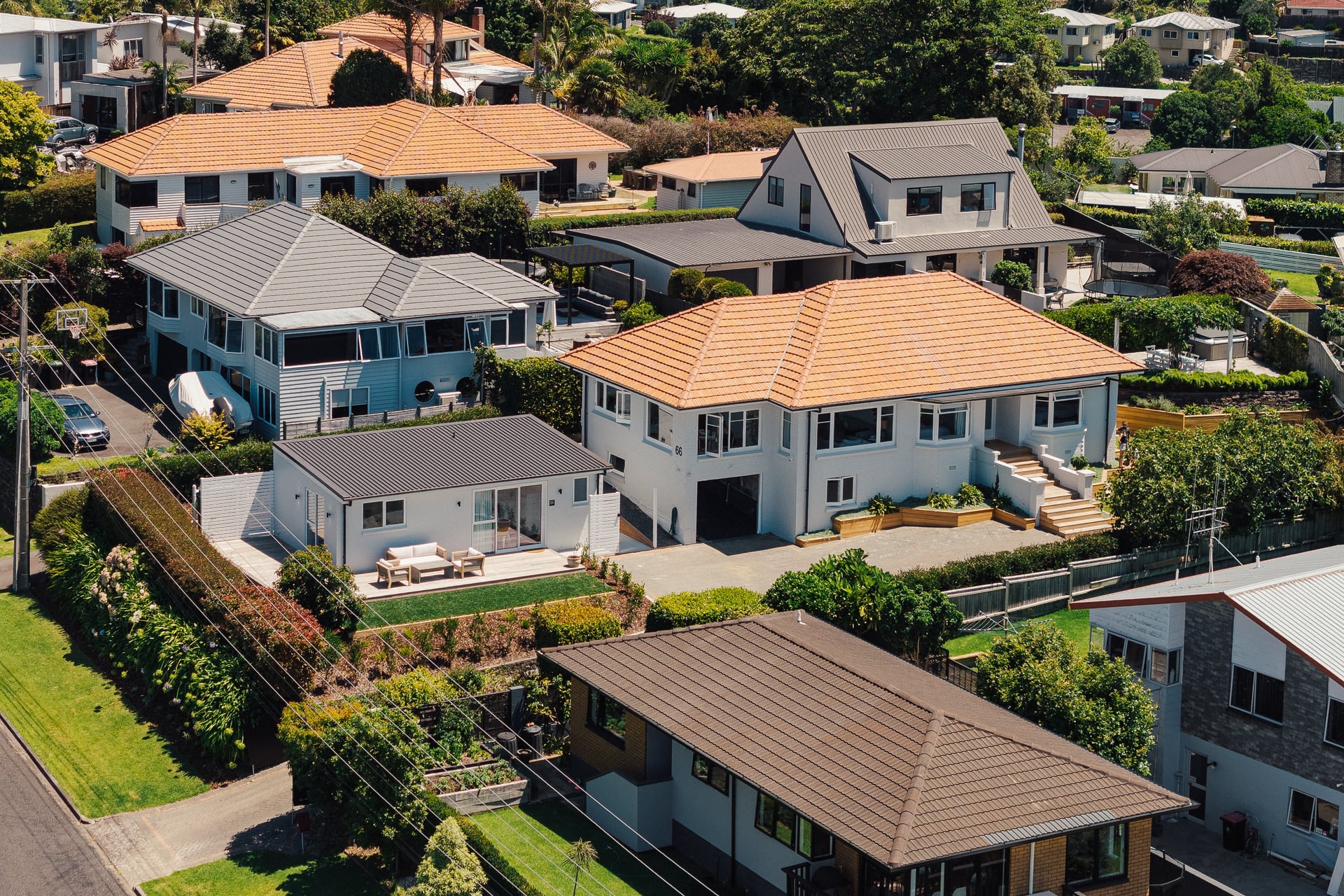
There has been a lot of noise in the last 18 months about new rules making granny flats easier to build. Some of it is accurate. A meaningful share of it is not, or it is accurate as far as it goes but does not say where the rule stops applying. This post is the working version we use with our own clients in Tauranga and the wider Bay of Plenty when they are thinking about adding a minor dwelling.
The 2024 changes to the Building Act are real, the consent-exempt pathway for some smaller granny flats is real, but it is narrower than the headline.
In planning language, a minor dwelling is a self-contained second residential unit on the same legal title as the main home. It has its own kitchen, bathroom, and sleeping space, and it can be lived in independently. The colloquial term granny flat is the same thing in practice.
Minor dwellings are different from a sleepout (no separate kitchen), an extension (still part of the main home), a cabin (typically not consented for full residential use), and a separate dwelling on its own title (that is a subdivision, not a minor dwelling).
The Government amended the Building Act in 2024 to allow certain standalone single-storey small dwellings up to 70 m² to be built without a building consent, subject to specific conditions. The political headline was "no consent needed for granny flats up to 70 square metres." The legislative reality is more specific.
The exemption applies only when all of the following conditions are met:
In other words: the dwelling does not need a building consent in the conventional sense, but it does still need to be designed and built by qualified professionals to recognised standards, services still need to be properly connected and certified, and council still has visibility of the build. It is not build whatever you want without telling anyone.
The 70 m² consent-exempt pathway does not apply, and you will still need full building consent, in the following common situations:
Building consent and resource consent are different things. The 2024 changes addressed building consent. Resource consent — the planning question, governed by the relevant district plan — is a separate consideration, and depending on your section and zone you may still need resource consent for a minor dwelling even where building consent is exempt.
Common resource consent triggers:
Tauranga City Council, Western Bay of Plenty District Council, and other BOP territorial authorities each have their own zone-specific rules. We check the rules for your specific address before pricing — there is no useful generic answer.
The rule changes are useful but should not be over-read. For most BOP minor dwelling projects in 2026, the practical situation is:
Can my new granny flat be rented out?
Subject to your zone's rules, yes. Most BOP zones permit rental of a compliant minor dwelling. Some have specific restrictions on short-stay accommodation. Check the rules for your specific address.
Will building a granny flat affect my main home's rates?
Likely yes. The minor dwelling will typically be assessed for separate rating purposes once it is occupied. Council can advise of the specific rating impact for your property.
Can I do it myself if it is consent-exempt?
No. Even under the 2024 exemption, the dwelling must be designed and built by appropriately licensed practitioners at the right LBP class.
How much does a quality minor dwelling cost in 2026?
Typically $250,000 to $600,000 build cost, depending on size, specification, and site, plus services and connections. Our minor dwellings page has more detail.
Can Gardo Group take a project through the consent-exempt pathway?
Yes. We are LBP-licensed, members of both Registered Master Builders and NZ Certified Builders, and our team is qualified for the supervision and certification regime that the exemption pathway requires. We will tell you, upfront, whether your specific project genuinely qualifies for the exemption or whether the standard consent path is the better route.
If you are thinking about a minor dwelling in Tauranga, Ōmokoroa, Te Puna, or anywhere in the BOP, talk to us. The first step is a site visit and a real conversation about what your section can support.